top of page

Adam McCracken
PINK INK
A BEGINNERS GUIDE TO QUEER ERASURE AND ACTIVISM
DEEP DIVE:

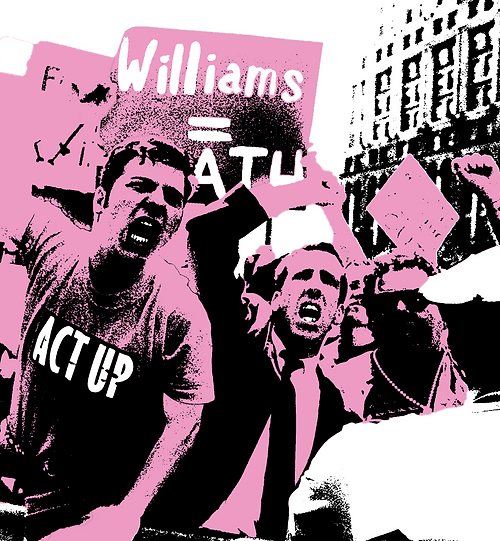
Image Source: Westervelt, E. (2017, April 17). ACT UP Turns 30, Uses Same Tactics To Boost Resistance Movement Against President Trump. NPR. Retrieved March 10, 2025, from https://www.npr.org/2017/04/17/522726303/act-up-at-30-reinvigorated-for-trump-fight
Exposition
When first setting out on the early stages of my senior capstone project, I was focused heavily on the current wave of anti-queer legislation that aims to censor the education of our youth, restrict access to healthcare, and upend vital civil rights protections.
With increasing opposition to the progress that queer people have made over decades of activist efforts, I determined that the most effective route for creating a meaningful capstone project would be to focus my efforts on educating the public about the history of queer oppression and activism, while bringing awareness to modern political issues.
I also wanted to help inspire the development of collective action, particularly through the lens of designers and other creatives. Highlighting the importance of symbolism, visual communication, and efficient efforts for disseminating public information, I aimed to create a call to action for designers to use their voices to inspire others.
Why zines?
When developing the format and visual identity of my project, I was inspired heavily by archived remnants of queer grassroots organizations and gatherings that were prominent in the 1970s, 80s and 90s.
Through these archival resources, I found an abundance of posters, fliers, booklets, and zines. These bits of ephemera helped fight for queer progress through community organizing.
Zines proved to be a historically relevant medium for spreading awareness and rallying support while utilizing efficient production methods that kept costs cheap, and allowed information to be spread more easily.

Image Source: O’Brien, K. (2019, June 24). What LGBTQ Life, Activism, and Organizing in the United States Were Like Before Stonewall. Teen Vogue. Retrieved March 9, 2025, from https://www.teenvogue.com/story/lgbtq-life-activism-organizing-united-states-before-stonewall

Book one
Book One serves as the core of Pink Ink, offering an overview of the past century of discrimination against queer people, the emergence of activist organizations, and the influential figures who helped drive change.
By establishing a strong foundation in the historical contexts of discrimination, violence, and misrepresentation, Pink Ink aims to present an honest and grounded perspective on the struggles faced by earlier generations of gay and trans individuals—and the actions they took in response.
Through the examination of key issues, platforms, and messaging from past activist movements, we gain a clearer understanding of the challenges they faced, the limitations they encountered, and the strategies they used to push beyond them.


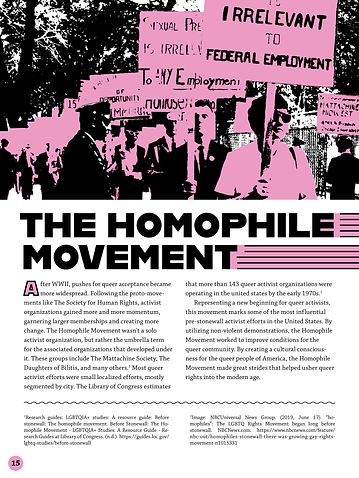
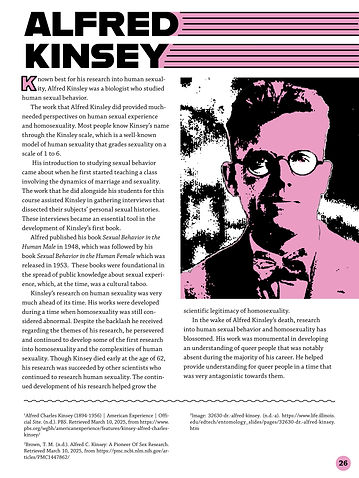
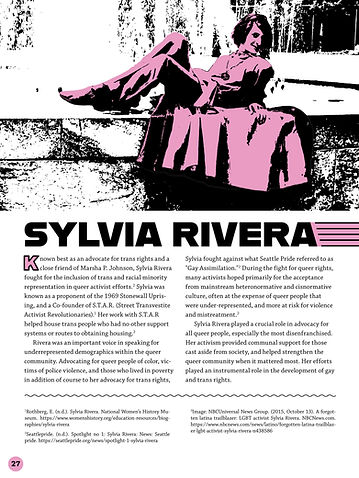
zine two
The second zine explores the intersection of activism and design, examining historical protest movements through the lens of visual communication. By contrasting past design strategies with today’s political climate, the book highlights how creative expression continues to shape public discourse.
From banners and posters to flyers, pamphlets, and buttons, activist movements have long relied on printed ephemera to spark collective action. These materials serve not only as tools of persuasion but also as cultural artifacts that map the evolution of resistance.
This zine aims to remind contemporary designers of the power they hold—to craft symbols and messages that rally communities, amplify voices, and drive social change.





Flipbook
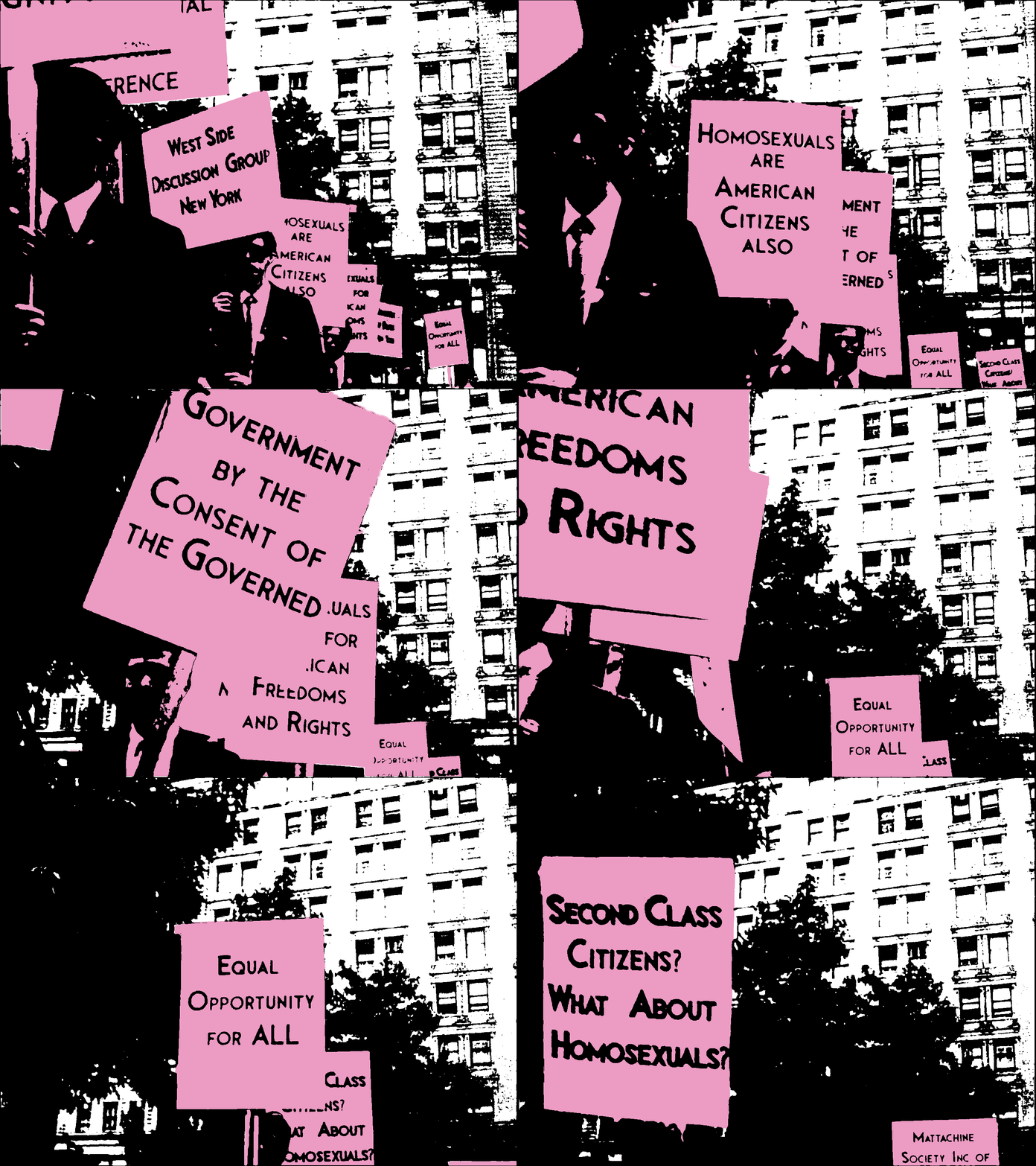
The base footage used in this rotoscope animation was taken from the 1968 documentary "The Second Largest Minority", which documents a Mattachine protest demonstration during one of Philadelphia's "Reminder Days." The documentary is archived by the Library of Congress, and can be accessed here.
When I first decided to create a flipbook as part of this project, I was drawn to the idea of using a print-based medium to animate the energy of a past era of protest. I wanted to capture the movement, urgency, and emotion of historical demonstrations in a tactile, analog format. Since print media has such a powerful history in activist efforts and the queer culture of the past, I found it very fitting to help recount even just a few seconds of history through paper media.
The flipbook became a way to breathe life into archival imagery, allowing viewers to witness a moment in motion rather than as a static artifact. By reinterpreting these scenes through design, I hoped to create a bridge between then and now—a reminder that the spirit of resistance is not frozen in time, but continually renewed.
Buttons
The button designs that I developed were intended to be a smaller and more actionable asset of my project as a whole.
Separation is Subjugation came about as a response to efforts to separate gay and trans people—this design in particular stands for queer solidarity.
Print, Publish, Protest was meant to act as an abbreviated call to action to designers. Keeping a simple yet powerful tone, this design was meant to inspire change on an individual level.

bottom of page